Silence in Meetings
In Japanese business culture, there is a concept known as ma (間). Ma is the use of meaningful silence, pausing, and intentional space. Ma is a conversational technique that utilizes moments of silence. When a meeting member raises a point or asks a question, the common practice is to remain silent until a senior member speaks. The pause in verbal communication gives members time to formulate a thoughtful response. Taking a pause to think about a colleague's remarks is a sign of respect. Addressing a comment too quickly, instead of waiting for a senior member, translates as impatience and brashness. Two ways to successfully attend a Japanese business meeting are to be comfortable with the flow of silence and observant of other members' subtle actions.
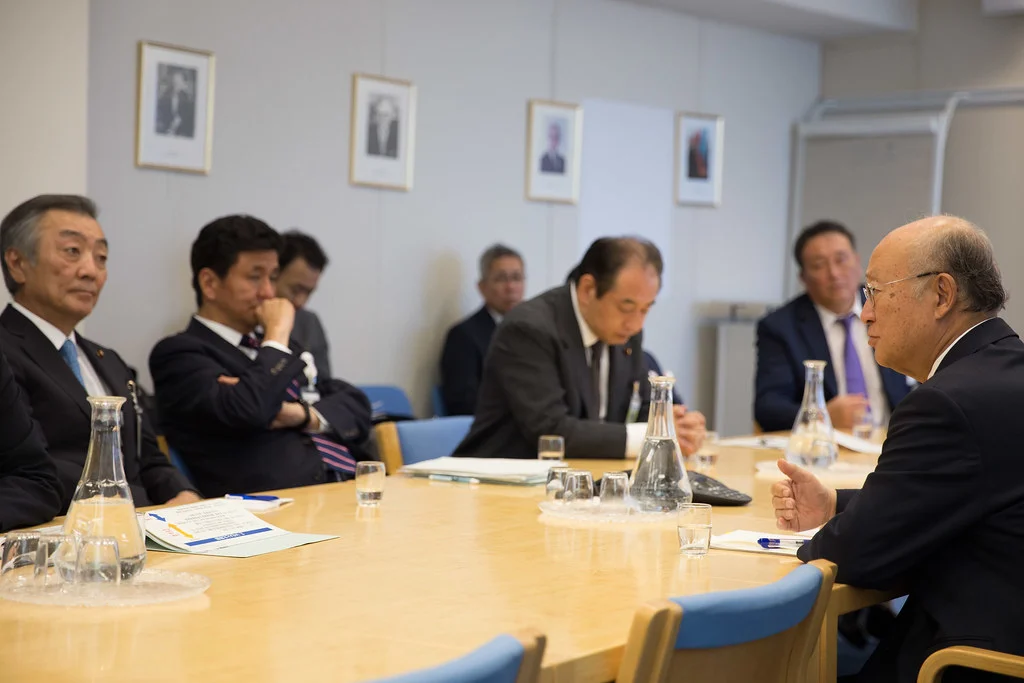
Source: https://jobsinjapan.com/japan-faq/the-japanese-world-of-silent-business-negotiations/
Hierarchy and Seating
Japanese culture emphasizes hierarchy. In formal business meetings, seating arrangements reflect hierarchy by design. The highest ranking member to the lowest ranking member are arranged in order on each side of the table. Two main concepts govern parameters for seating kamiza (上座) and shimoza (下座). Kamiza is the seat of honor where the highest-ranking member from the guest company sits. Kamiza is always placed furthest from the door. Shimoza is the seat closest to the door where the lowest-ranking member sits. The member sitting in Kamiza is often sent to fetch items and complete other tasks because their presence in the meeting is the least important. As an attendee, you must never assume what seat you will sit in. One should wait until the host guides each member to a seat to properly follow etiquette.
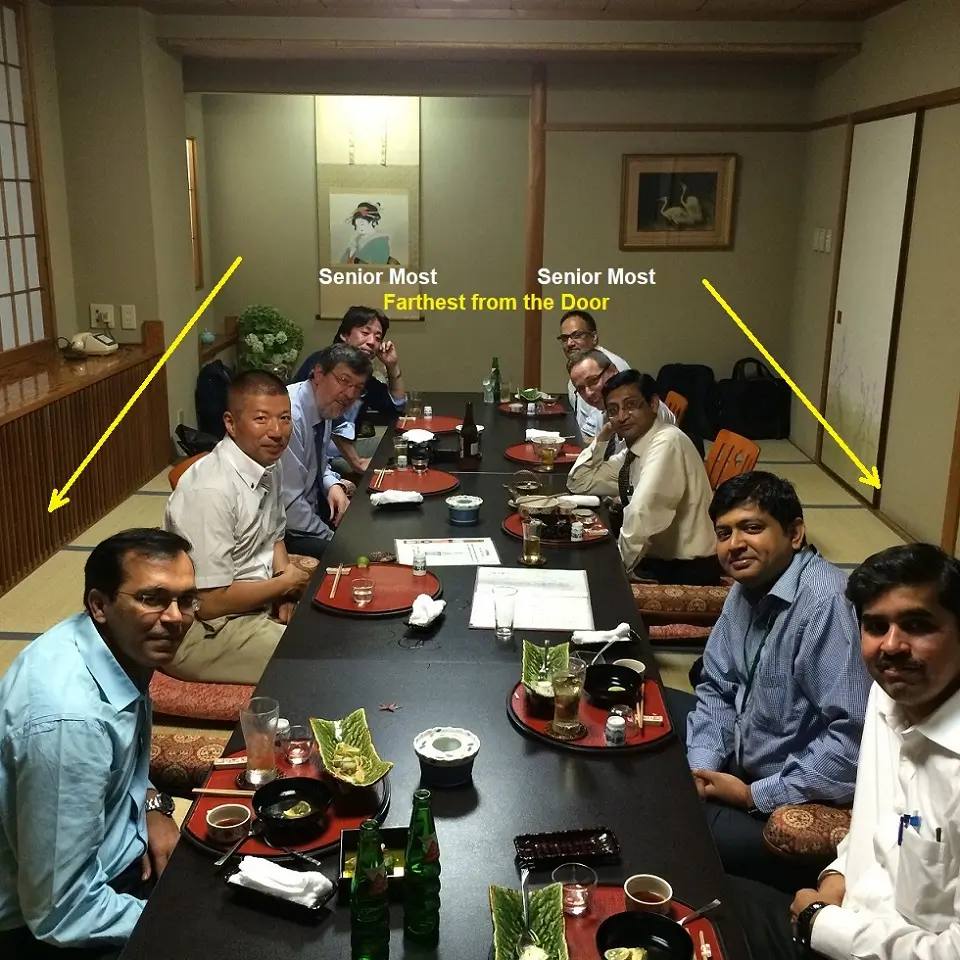
Source: https://www.ejable.com/japan-corner/japanese-culture/seating-protocols-in-japan/
Decision-Making Process
Decision-making in Japanese meetings is a group activity that typically occurs before the meeting takes place. This practice is called nemawashi (根回し). Both businesses discuss internally with colleagues and come to a decision. During the formal meeting, ideas will be documented and discussed, as opposed to creating everything from scratch. Instead of trying to introduce new ideas, you, as a member of the meeting, should provide support to your colleagues.

Source: https://www.insperity.com/blog/collaboration-and-decision-making-strategies/